



Table Of Contents:
Agentic AI applications transforming business intelligence
How agentic AI differs from traditional AI
How agentic AI is transforming organizations
Real-world use cases of agentic AI applications
How agentic AI works behind the scenes
How data infrastructure powers agentic AI
Key challenges in scaling agentic AI
The future of agentic AI depends on data
Frequently asked questions
Agentic AI applications transforming business intelligence
Agentic AI represents the next giant leap in artificial intelligence and machine learning. AI agents promise to move beyond dependency on user inputs to become autonomous systems that can perceive their environment, reason over multimodal data, make independent decisions inside multi-step workflows, and learn from the results to become more effective.
Agentic AI is already transforming work across high-value domains. In healthcare, agentic systems can triage patients and create care plans using complex clinical data streams. In genomics, agents can automate research pipelines that integrate sequencing, imaging, and metadata. And in geospatial analytics, agents continuously monitor satellite feeds to detect change and trigger downstream actions without human intervention.
This makes it no surprise that Deloitte recently found agentic AI is the AI-related development of greatest interest among senior executives. As organizations gather ever larger and diverse datasets, agentic AI can help them transform all this raw information into deeper and more useful insights. This article examines where agentic AI applications are delivering value today, how these systems technically function, and what organizations need to consider when implementing and scaling AI agents. Because agentic AI relies on seamless access to multimodal data, we also explore the critical role of unified data infrastructure in enabling reliable and secure agentic workflows. Let’s begin by examining how agentic AI differs from other kinds of AI.
How agentic AI differs from traditional AI
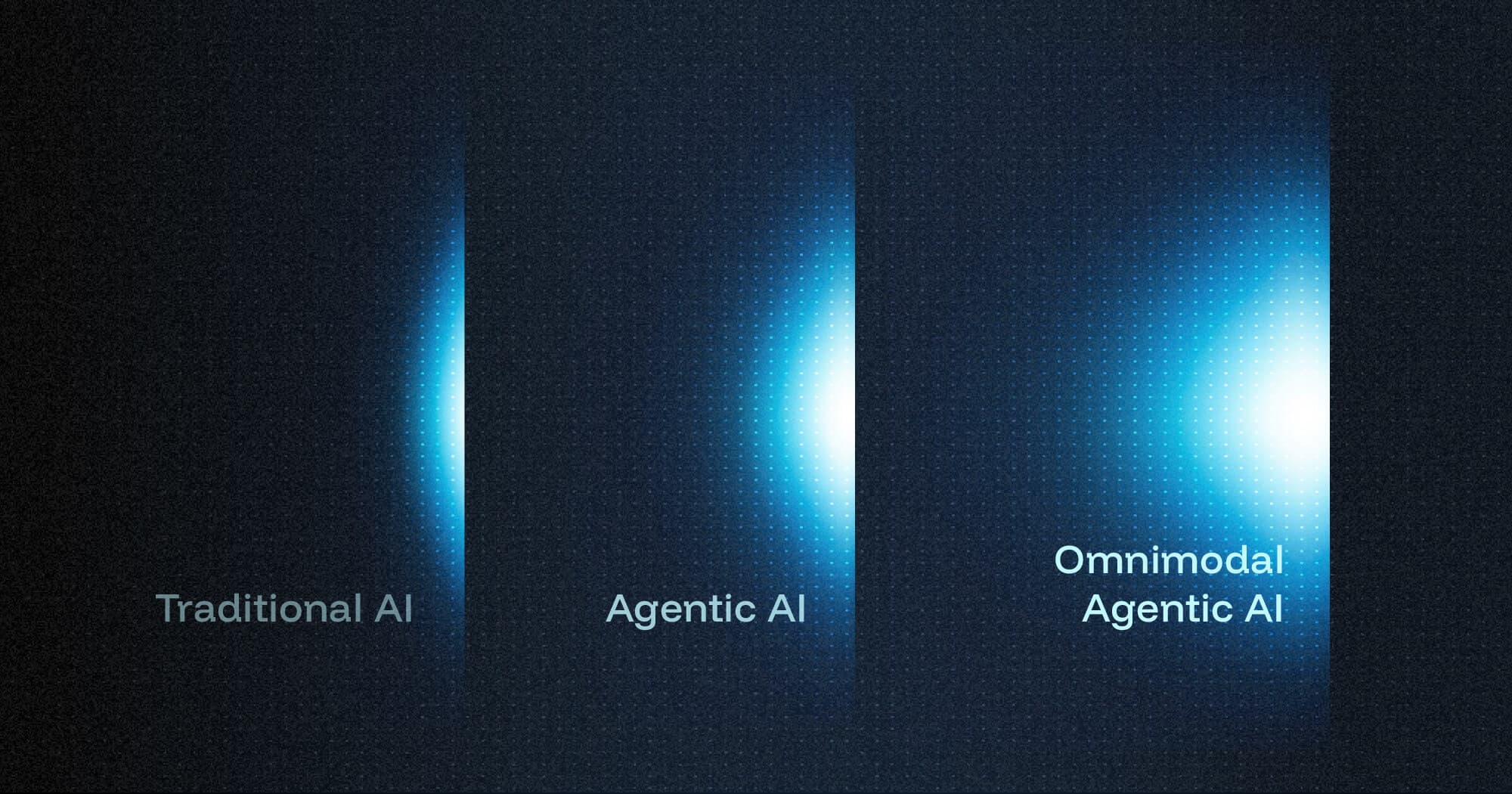
Agentic AI refers to autonomous systems that can perceive their environment, reason over available information, plan multi-step strategies, and take independent actions toward a defined goal. This represents a significant shift from traditional AI, where models typically act as static responders that receive an input, compute an output, and wait for the next instruction before acting again.
The main difference is being reactive versus autonomous. Traditional AI is reactive, acting only when prompted and producing a single response. In contrast, agentic AI is capable of proactive and independent behavior. It can assess whether more information is needed, call the appropriate tools or models, choose a course of action, and track progress toward completion. This enables agentic AI to take on complex workflows such as helping a pharma research lab by orchestrating multimodal data analyses, autonomously refining hypotheses in response to experiment conditions, or coordinating downstream tasks across different systems.
Three capabilities distinguish agentic AI from traditional AI. First, advanced reasoning allows agents to break down problems, compare potential strategies, and adjust based on real-time signals. Second, memory (including both short-term working memory and longer-term knowledge stores) lets agents maintain context across steps and learn from prior outcomes. Finally, adaptability ensures that agents can learn and improve with experience by modifying their strategies when conditions or objectives change.
Together, these capabilities transform AI from a tool that can only answer questions into an active collaborator capable of executing detailed strategies and optimizing processes across an enterprise. Let’s take a closer look at how agentic AI is changing the business and research landscape.
How agentic AI is transforming organizations
Agentic AI is reshaping business operations by moving organizations beyond traditional automation toward adaptive systems that perceive, reason, and independently act in real time. Instead of relying on humans to trigger workflows or on rigid scripts that perform predefined tasks, agentic systems continuously interpret signals from different data modalities, evaluate possible actions, autonomously execute tasks, and learn from outcomes to self-improve. The result is a more resilient and lean operating model that embeds intelligence directly into business workflows.
Agentic AI is already transforming organizations across three core dimensions:
Decision-making: Agents synthesize diverse data like operational metrics, VCF files for population genomics, geospatial imagery, and customer service communications to offer insight or execute decisions. For example, an agent can track weather trends and traffic reports to anticipate supply chain delays, then automatically reroute deliveries to ensure inventory and products arrive at the right time.
Productivity: By autonomously handling multi-step tasks, agentic systems free up technical teams from tedious work. AI agents can detect IT incidents, diagnose root causes, and apply fixes like software updates and device reconfigurations without human oversight. This enables IT experts to focus on strategic planning and other high-value tasks while AI handles routine problems.
Innovation: Agents accelerate research discovery by streamlining all kinds of processes like gathering experiment data, comparing findings with published results and other data sources, and sharing insights across teams. In life sciences, agentic systems can help researchers create complex development pipelines that analyze published results across platforms and use these insights to help plan new experiments in pursuit of new medicines and treatments.
Real-world use cases of agentic AI applications
The following section highlights active, real-world use cases of agentic AI that are already reshaping industries like life sciences and research, cybersecurity and IT operations, environmental and geospatial intelligence, and compliance and auditing. Let’s examine how agentic AI systems are executing autonomous workflows, analyzing and reacting to multimodal datasets, and accelerating decision-making at enterprise scale.
Life sciences and research
Pharma and healthcare lead in AI agent adoption, with about 23% of the sector adopting agentic AI in 2024. Agentic AI is accelerating discovery by autonomously managing the complexity of multimodal biomedical data. As life sciences research requires integrating data across genomics, pathology imaging, wearables output, EHRs, and longitudinal cohort modalities, agentic systems play a key role. Agents can ingest these diverse sources, harmonize them into a shared platform, identify patterns, and continuously refine analyses as new data streams arrive. For example, an agent can accelerate clinical trial readiness by automatically screening eligible patient cohorts, reconciling protocol criteria against real-world data, and flagging high-value biomarkers derived from combined omics and imaging signals. These agentic systems reduce the time needed to identify disease mechanisms or therapeutic targets to deliver more effective treatments faster.
Cybersecurity and IT operations
In cybersecurity and IT operations, agentic AI acts as a real-time defender that both detects anomalies and responds autonomously. Instead of waiting for human experts to intervene, AI agents continuously monitor logs, network telemetry, endpoint signals and other data to spot deviations from normal behavior (See IBM’s Watson AIOps for a detailed example of how this works.). If these deviations turn out to be threats, agents can isolate compromised resources, block suspicious processes, update firewall or identity policies, and orchestrate coordinated incident responses across tools and platforms. These systems also learn from each event, improving their understanding of attack patterns and infrastructure behavior. Deloitte describes how IT agents can “autonomously detect attacks and generate reports, improving system security and reducing the workload of human experts by up to 90%.”
Environmental and geospatial intelligence
Agentic AI enhances geospatial intelligence by interpreting high-volume, high-resolution data streams like satellite imagery, drone surveys, and weather sensors at a speed humans cannot match. This enables agents to classify land-use changes, detect deforestation or flooding signatures, and integrate forecasts to anticipate environmental risks. When such risk indicators appear, the agent can autonomously trigger alerts, share insights with stakeholders, and even activate mitigation workflows such as rerouting emergency vehicles or optimizing water and energy usage. This autonomy allows governments, insurers, and logistics organizations to shift from reactive monitoring to proactive environmental management. Cotality uses CARTO’s Agentic GIS platform to scale their real-time analysis of land acquisitions, permits, and demographics to predict where U.S. growth is likely to increase or decrease in the future.
Compliance and auditing
In compliance and auditing, agentic AI transforms oversight by reading, comparing, and reasoning over vast collections of documents, including financial statements, insurance policies, regulatory filings, contracts, and internal controls. Agents can autonomously detect inconsistencies, policy conflicts, missing disclosures, or other issues by cross-referencing thousands of pages with regulatory requirements and historical patterns. When such issues arise, the agent can recommend corrective actions, generate compliance summaries, or initiate follow-up workflows for human reviewers to reduce manual review time while improving accuracy and traceability. As regulations evolve, agentic systems also adapt quickly by updating their reasoning criteria and continuously scanning new enterprise documents to maintain an up-to-date compliance posture. Auditboard reports 64% of internal audit teams are exploring or considering the adoption of AI agents in the next 12 months.
How agentic AI works behind the scenes
Here’s how the design of agentic AI applications work under the hood to follow a structured decision-making cycle that enables them to think and act independently. An agent’s cycle generally moves through four core stages: perception, reasoning, action, and feedback. In the perception stage, the agent ingests and interprets incoming signals such as genomic reads, clinical notes, satellite imagery or system telemetry to form an updated understanding of its environment. The reasoning stage evaluates that information, decomposes the problem, considers alternative strategies, and decides what should happen next.
Once a plan is selected, the agent enters the action stage. Here it may execute a multi-step workflow, call external tools, update databases, trigger downstream analyses, interact with other systems, or use natural language processing to communicate with humans. What’s key is that agentic AI does not stop after taking an action. Instead, it actively monitors the results, interpreting feedback signals such as model outputs or changes in environment. This feedback closes the loop, allowing the agent to adapt its future behavior by learning from past outcomes to refine its strategies as conditions evolve.
For this cycle to work reliably, agentic systems require seamless access to the data and infrastructure that fuel each step. Multimodal datasets provide the context for perception and reasoning, while scalable compute resources support on-demand planning and tool use. For AI agents to continuously improve, they need robust feedback from sources like system logs, experiment results, or user evaluations. The iterative cycle of perception, reasoning, action, and feedback enables agentic AI to operate as an intelligent layer on top of existing workflows and enterprise systems.
How data infrastructure powers agentic AI
Every agentic AI system relies on high-quality data access to reason effectively. Agents make decisions based on what they can perceive, and perception is only as strong as the data that flows into it. This makes unified and reliable data infrastructure a critical foundation of effective agentic AI.
Without unified data infrastructure, AI agents struggle to integrate multimodal information or learn from past actions. For example, in life sciences research a single workflow may require genomic data, imaging data, operational telemetry, and team communications. If each of these lives in a different system with incompatible formats or access controls, the agent cannot form a coherent picture of the problem it is trying to solve. Such fragmentation also increases latency. When an agent must move large datasets across systems just to run a single decision loop, this limits its ability to act in real time. Inconsistency becomes another challenge: if the state of the data differs across storage systems, agents cannot reliably learn from previous cycles, reducing the value of its feedback loops.
A unified data infrastructure solves these issues by unifying storage, access, governance, and computation into one cohesive layer. Instead of pushing data through a complicated series of pipelines, agents can query and compute directly where the data lives. This improves reasoning by ensuring all modalities are available in one place, reduces latency by eliminating unnecessary data movement, and supports more effective learning cycles because agents always reference a single source of truth.
TileDB is a strong example of the kind of infrastructure purpose-built for agentic AI, offering:
Data harmonization: TileDB integrates multimodal data like genomics, imaging, clinical records, and single cell data into a unified catalog rather than stitching together siloed systems. This empowers agents with simplified access to all the different data they need to analyze modalities and make effective decisions.
Low-latency retrieval: With its array engine and cloud-native architecture, TileDB facilitates fast querying of high-dimensional datasets with complex modalities. This helps agents perform better and learn faster.
Versioning & governance: TileDB provides access controls, rich metadata, cataloging, and auditability to make it easy for research teams to comply with FAIR data principles and regulatory requirements.
TileDB’s multi-dimensional array storage model directly addresses the agentic AI challenges of fragmentation, latency, and data consistency by giving agents a unified environment where multimodal data is easy to retrieve, reason over, act upon, and learn from. Partnering with Kepler AI and Tahoe Therapeutics, TileDB is supporting the development of a first-of-its-kind public platform that allows researchers to apply AI agent–driven analysis to extremely large single-cell datasets. The platform gives scientists efficient access to the Tahoe-100M single-cell atlas, which contains over 100 million transcriptomic profiles. Previously, the size and complexity of Tahoe-100M limited Kepler AI’s ability to deploy AI agents at scale. By leveraging TileDB’s multimodal, cloud-native database architecture, the atlas can now be accessed as a scalable, interoperable resource. As a result, AI agents are able to operate directly on full-resolution single-cell data across the entire dataset.
Key challenges in scaling agentic AI
As organizations move to production-scale agentic AI systems, they are encountering practical and ethical challenges that are often more complex than the model-building itself. Deploying agents that can perceive, reason, and act across real operational environments requires organizational readiness, governance maturity, and a clear understanding of system-level risks.
Data fragmentation and integration are the most persistent challenges. Agentic systems need unabridged access to multimodal data like images, logs, genomic reads, documents, CRM datasets, and telemetry. However, many enterprises still store these assets in isolated systems with incompatible formats or security models. Without robust integration, AI agents lack the unified context necessary to make reliable decisions and learn from the outcomes.
Interpretability and trust present another hurdle. As agents take more and more autonomous actions, stakeholders need visibility into how decisions are made and whether they align with domain expertise, regulatory expectations, ethical guidelines, and other sensitivities. Agents are often unable to articulate their reasoning, creating black-boxes that erode confidence. This is especially problematic in regulated sectors like healthcare, finance, or critical infrastructure. Organizations must address this challenge by investing in transparent reasoning frameworks and human-in-the-loop review paths that maintain accountability.
Finally, infrastructure and cost shape whether agentic AI can scale sustainably. Running the continuous perception-reasoning-action loops of agentic AI across large multimodal datasets demands storage, compute, and orchestration capabilities that far exceed traditional AI workloads. Without efficient infrastructure, IT costs rise quickly and latency undermines the value of autonomy. This makes scalable architectures like unified data platforms and compute-in-place models essential to keep agentic systems economically viable.
The future of agentic AI depends on data
Agentic AI marks a transition from reactive intelligence to autonomous systems capable of reasoning, planning, and acting across complex workflows. But the effectiveness of these agents hinges entirely on the quality, consistency, and accessibility of the data informing their decisions. Without a unified data infrastructure, even the most advanced agents will struggle to integrate multimodal signals or learn reliably from past actions.
Scalable, unified data infrastructures like TileDB Carrara enable this next generation of AI by giving agents consistent, context-rich access to genomics, imaging, geospatial, tabular data, and other modalities in a single environment. This allows agentic systems to reduce latency, improve reasoning, and operate with greater confidence and autonomy. To explore how a unified data platform can accelerate your agentic AI strategy, contact us.
Frequently asked questions
Q1. What is agentic AI?
Agentic AI refers to systems that can perceive their environment, reason about goals, and autonomously take actions to complete multi-step tasks.
Q2. How does agentic AI differ from generative AI?
Generative AI produces outputs when prompted, while agentic AI plans and executes actions independently using continuous feedback.
Q3. Which industries are using agentic AI today?
Healthcare, life sciences, cybersecurity, finance, geospatial intelligence, and IT operations are already deploying agentic systems.
Q4. How does a unified data infrastructure help?
It gives agents reliable, consistent access to multimodal data, improving reasoning accuracy, reducing latency, and supporting stable learning cycles.
Meet the authors