



What a week! Between trade shows, travel and tornados there’s been no shortage of activities, excitement and the unexpected here at TileDB. Let’s dive in!
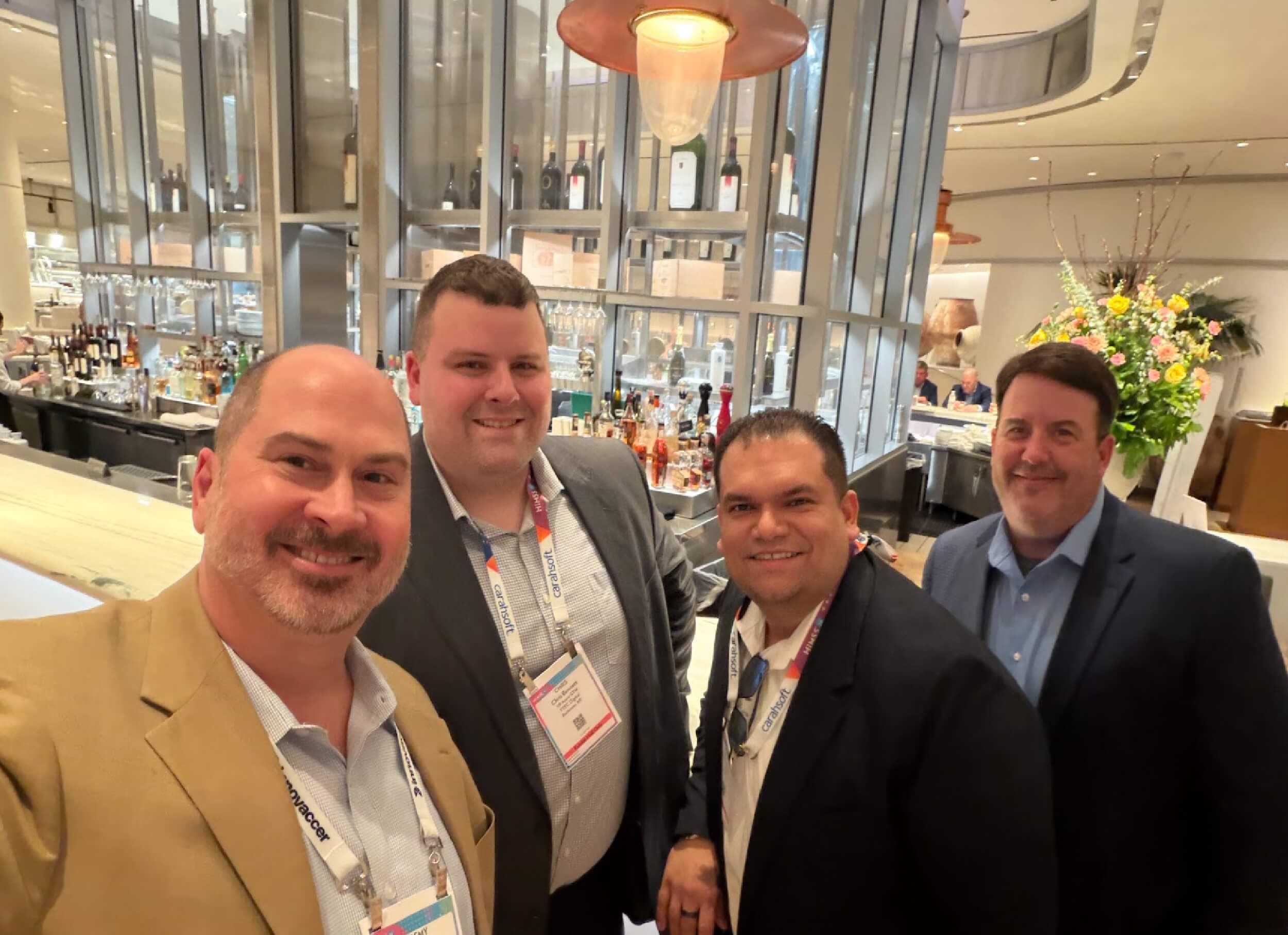
At last week’s HIMSS26 event, I had the pleasure of hosting a reception with our partners Microsoft and TTEC Digital. It proved to be an exceptionally insightful meeting of the minds from across the Health and Life Sciences industry. We are clearly at a pivotal moment and the next step is clear: we must enable the next-generation of AI applications to meaningfully improve patient outcomes.
The biggest questions were “Where is AI in the HIMSS space?” and “How is AI actually moving the needle?” In a nutshell, we found measurable improvements where organizations are tackling the most complex data integration challenges.
Our conversations revealed that AI is past the exploratory phase and is now firmly established in highly specialized, data-intensive use cases. For instance, I learned that a large multi-national Health System plans to integrate population-scale Genomics data into a cutting-edge Patient Digital Twin application. Innovations like this will most certainly fuel the rise of small language model development through unified multimodal data sources—including genomics, longitudinal health history, and environmental determinants of health. This ability to fuse disparate, massive datasets is a direct enabler of high-impact AI solutions in Healthcare and Life Sciences (HCLS).
Conversely, our conversations also highlighted where AI is blocked—what isn’t working, and why. The main impediment to scaling AI in health is not the lack of models or compute, but the underlying data infrastructure. Many actively discussed the challenges of data governance, control plane complexity, and ultimately, scalability. Enthusiasm is certainly high, but our industry must focus on implementing solid, scalable, foundational platforms that offer ready-to-use AI tooling. If our AI platforms cannot leverage the existing HCLS Information and Management Systems, the next-gen solutions they could enable will remain inaccessible to our industry. As IT Practitioners, we must offer a standardized, performant engine capable of handling the sheer variety and volume of multimodal data required for these needle-moving applications.
How can TileDB help?
Tile is uniquely positioned to remove the key bottlenecks blocking AI's potential in health. Selfishly, our data engine provides the unified, scalable data foundation that AI models demand.
We enable the complex data integration needed for Patient Digital Twins by effortlessly handling genomics alongside clinical and environmental data.
We offer a solution for creating "unified multimodal data sources," allowing teams to train the next generation of genomics-focused large language models and solve critical public as well as private sector outcomes.
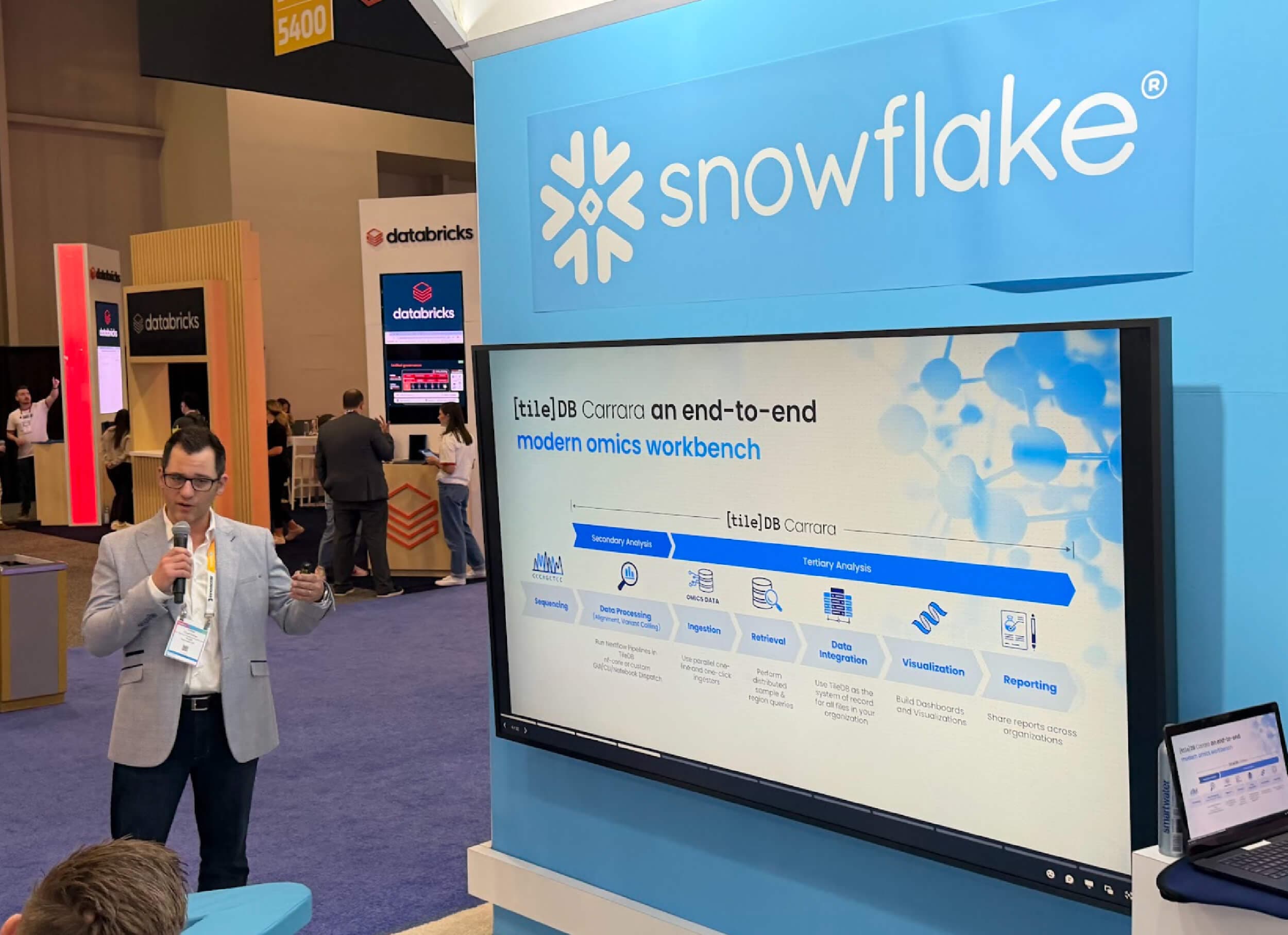
Furthermore, our Strategic Alliance and Consulting Partners like Microsoft, TTEC, Databricks and Snowflake are all actively exploring how TileDB technology for Omics & Multimodal data workloads can differentiate modern solutions from more traditional, siloed, legacy approaches.
The successful reception of our TileDB Carrara Snowflake Connected App underscores this differentiation, opening the door for new use cases and new customer markets. By doubling down with our strategic partners, we plan to address this meaningful market opportunity, accelerating AI’s impact in healthcare and beyond.


Meet the authors